
Vagli: Historical Traces, Abbey and Mountains in the Surrounding Area
Accommodation in Vagli
Vagli is a destination for travelers who wish to explore history not only through a single building, but through different traces. The place combines references to a historic Castello, religious sites and a landscape in which individual names point to mountains, castles and archaeological sites. The Church of San Pietro in Vallibus lies outside the small settlement of Vagli and thus creates its own spatial focal point. This arrangement makes it advisable when planning to distinguish between the place itself and the destinations in its surroundings.
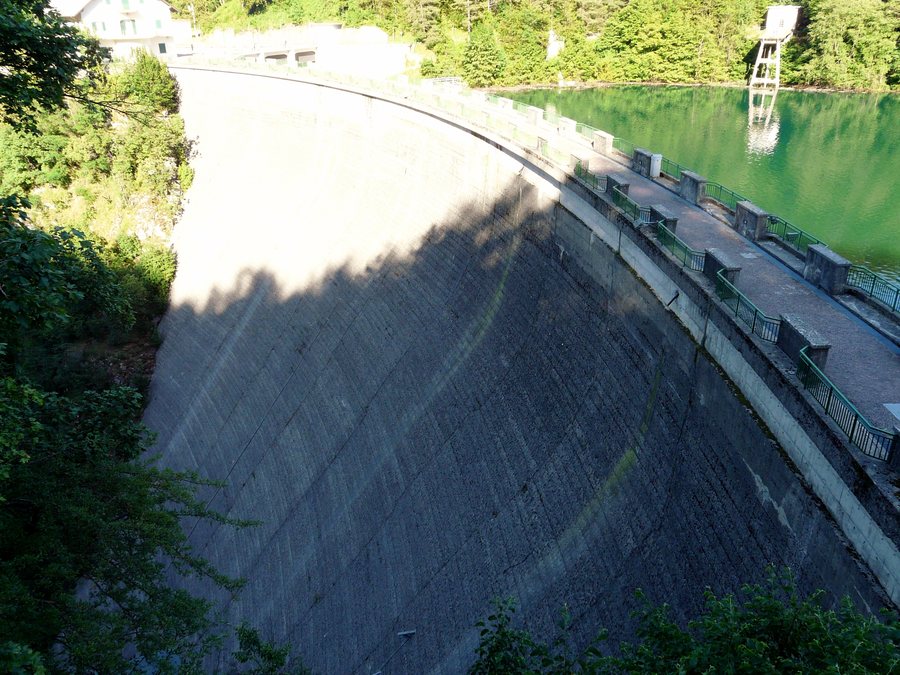 File:Lago di Vagli (Vagli Sotto)-diga1.jpg
Photo: Davide Papalini via Wikimedia Commons, CC BY-SA 3.0
File:Lago di Vagli (Vagli Sotto)-diga1.jpg
Photo: Davide Papalini via Wikimedia Commons, CC BY-SA 3.0
Historical References to Vagli
In 1200, Vagli was known as Castello di San Pietro in Valle (Castum vallis). The first documented mention of the Castello di Vagli dates from May 7, 1282. These two historical reference points give the history of the place a clearly tangible chronological depth and show that the history of Vagli cannot be reduced to a single name or a single date.
San Pietro in Valle Abbey and Religious Sites
On the outskirts of Vagli lies San Pietro in Valle Abbey in a valley where a plentiful spring feeds a large basin. This basin was used as an ancient washing place. Mass is still occasionally celebrated in the abbey church. For visitors interested in religious culture, the spring, basin and washing place are just as much part of this location as its continued religious use. The connection between a landscape feature and a sacred space gives the abbey a distinctive visual character.
At the Santa Trinità di Valle Cerasa site, only foundations, individual wall remnants and the remains of a cistern have survived. Here, the limited structural remains and their distribution are the main focus. The site thus represents historical traces that have been handed down not as a complete complex, but as individual remnants. For travelers interested in cultural history, this creates a different approach than a fully preserved building would offer.
Mountains and Other Destinations in the Surrounding Area
The mountains Monte Casalecchio, Monte Bello, Monte Citernella and Monte Castellaro are located in the immediate surroundings of Vagli. These four names expand the historical references with a landscape perspective. If you plan your excursions by theme, the mountains in the nearby area can play a role alongside religious and architectural history.
Destinations in the surroundings of Vagli include the castles Castello di Corbara and Castello di Prodo. Further afield in the region are the ancient site of Rovine di Carsoli and the Dell'Opera del Duomo Orvieto Museum. These different categories appeal to visitors who do not want to plan their days around just one period, but instead wish to alternate between castle history, archaeological traces and museum culture.
Nature Experiences near Acquaghiaccia
Acquaghiaccia also has its own distinctive character. Acquaghiaccia Country House is a country house belonging to Le Grotte, the Vagli district of Baschi. At Acquaghiaccia in Borgata Vagli, informative walks with a herbal expert are offered. During these walks, participants can identify and use wild berries and herbs. For travel planning in which nature is not merely observed but explored through knowledge of plants, this activity provides a specific complement to Vagli's historical themes.
Other Places
Benano, Torreorsina, Montecchio, Civitella Del Lago, Alviano, Acqualoreto, San Venanzo, Capitone
For the overarching travel overview: Terni.

-diga1.jpg)