
Volon among Churches, Legends, and Landscape History
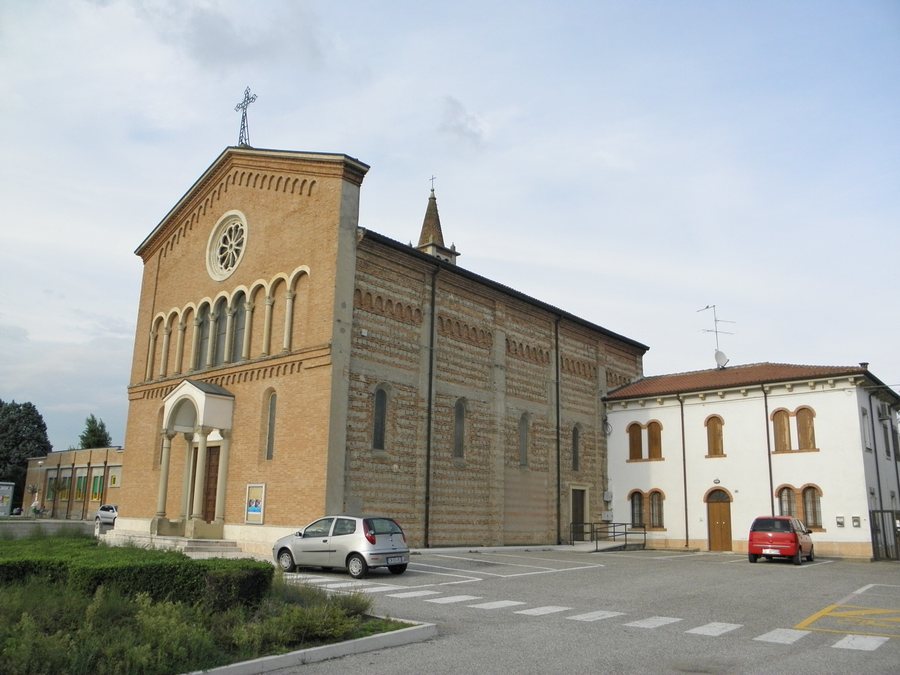 File:Chiesa della Santissima Trinità e Madonna del Rosario (Volon, Zevio) 01.JPG
Photo: Threecharlie via Wikimedia Commons, CC BY-SA 4.0
File:Chiesa della Santissima Trinità e Madonna del Rosario (Volon, Zevio) 01.JPG
Photo: Threecharlie via Wikimedia Commons, CC BY-SA 4.0
Churches and Local History in Volon
Volon stands out as a multifaceted place, particularly through its churches, local traditions, and the Torrazzo. The VOLON SantissimaTrinità e Madonna del Rosario Church is located at Piazza della Repubblica 1 in Volon, 37059 Zevio. The present building was constructed in 1929–1930 in the Neoclassical style. This building alone gives the town’s history a clear architectural connection.
Inside the church are several wooden statues, including a statue of Saint Zeno. The presbytery was extended in 1955. Thus, the same church building brings together the Neoclassical construction of the present structure and a later structural addition—a tangible point of access for anyone who wishes to view architecture not merely as a façade, but also in terms of its development.
An older connection can be found on Via Chiesa Vecchia. There stands the old Church of the Santissima Trinità di Volon. It was built in 1499 on behalf of Count Francesco Miniscalchi.
The Torrazzo, a four-story brick building, also stands in the center of Volon. Together with the two churches, it offers various architectural points of reference within the town. Those interested in architectural history and organically developed townscapes can therefore explore Volon through several clearly distinct landmarks.
Campanea minor and the Landscape around Volon
The history of Volon also reaches back into the development of the landscape. In the 12th and 13th centuries, Campanea minor was transformed through extensive drainage and land-clearing work to create arable land. The origins of the place name Volon are associated with this Campanea minor, an extensive wetland east of Zevio that also included the present-day area of Tombazosana.
The Parco di Pontoncello, a protected area along the Adige in the Zevio area, lies near Volon. Thus, alongside the churches, the Torrazzo, and the history of the place name, the landscape context is also central. The connection between local history and landscape development gives Volon a profile that extends beyond individual buildings.
Legend and Festival Culture
Local tradition includes the legend of the boio dei Miniscalchi. It is set at the source of the Bussè and remains alive in the collective memory.
Another focal point is the Sagra patronale della SS.Trinità in Volon. It takes place in the second week of June. The Sagra includes food stalls and music evenings. For your travel planning, this provides a clear temporal reference: in addition to churches, landscape, and local history, Volon also has a scheduled festival that gives a stay during the second week of June a special local character.
Understanding Volon as a Travel Destination
This gives you several focal points for your planning. The churches and the Torrazzo represent architecture and local history, Campanea minor the historical transformation of a landscape, Parco di Pontoncello a protected area along the Adige, and the legend of the boio dei Miniscalchi local memory. If you are looking for accommodation or a hotel in Volon, you can use these specific themes to decide which aspect should shape your trip most strongly.
For the broader travel overview: Zevio.
Check prices, availability, and amenities for your travel dates directly on Booking.com.
View Accommodation and OffersAdvertisement · Affiliate link to Booking.com
_01.JPG)