
Anversa degli Abruzzi between gorges, churches and history
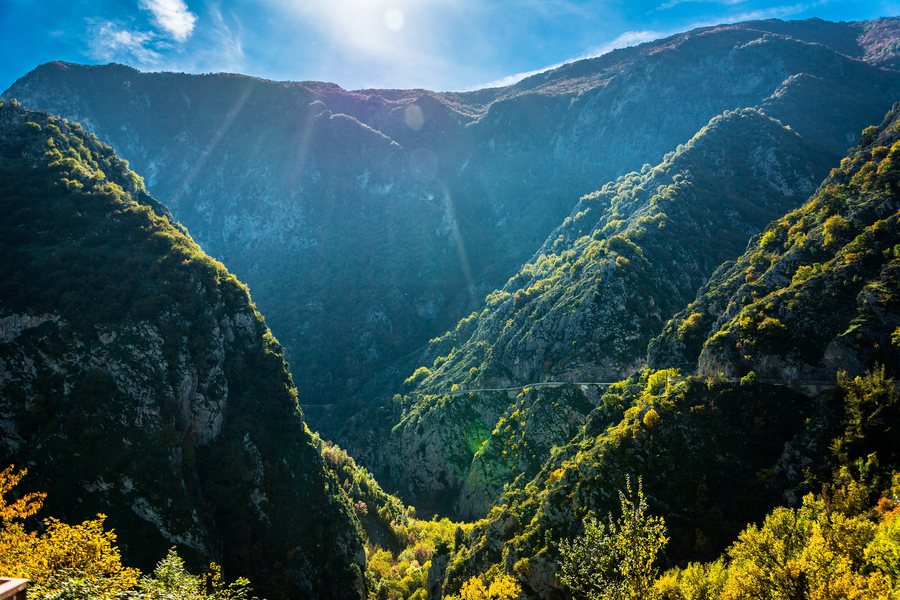 File:Gole del Sagittario, Anversa degli Abruzzi.jpg
Photo: Fabio Ciminelli via Wikimedia Commons, CC BY-SA 4.0
File:Gole del Sagittario, Anversa degli Abruzzi.jpg
Photo: Fabio Ciminelli via Wikimedia Commons, CC BY-SA 4.0
Anversa degli Abruzzi combines the landscape of the Gole del Sagittario with churches, archaeological traces and literary connections. If you would like to combine experiences in nature with cultural history, the town offers several clearly distinct themes: protected gorges and springs, medieval religious buildings, evidence from antiquity and the memory of Gabriele d’Annunzio.
Gorges, springs and protected nature
The Gole del Sagittario protected area covers approximately 450 hectares. It stretches from an elevation of 500 metres below the town of Anversa to the pastures between Pizzo Marcello and the outer protected zone of the nearby Parco nazionale d’Abruzzo at an elevation of 1,500 metres. The high rock walls of the gorge provide a habitat of exceptional global faunal interest, particularly for the nesting sites of birds of prey.
The Sorgenti di Cavuto are home to a botanical garden of regional interest with approximately 400 species. Directly beside these springs and just below the town, the Centro Visite is housed in a restored old mill. It is dedicated to the Gole del Sagittario. At the entrance to the Sorgenti di Cavuto, there is also a path with facilities that make visiting the protected area easier for people with special needs.
Churches and medieval architectural history
The Castello Normanno was built by the Normans in the 12th century. The parish church of San Marcello was built in the 11th century within the town of Anversa degli Abruzzi and is the oldest church in the town. It has a late Gothic portal with a fresco of unknown authorship in the curved lunette; its execution is dated to 1472.
S. Maria delle Grazie is a three-aisled church with an apse dating from the 16th century. The 1530 San Rocco altar features a polychrome terracotta statue created by ceramicists from Anversa degli Abruzzi. The church of S. Vincenzo was built in the Early Middle Ages by the Volturnensi monks.
Archaeological traces and literary connections
The Necropoli di Coccitella comprises graves dating from the 4th to the 3rd century BC, as well as grave goods from the 2nd to the 1st century BC. Archaeological investigations in 1996 uncovered 50 slab-built tombs there. The Parco Letterario offers another way of exploring the town’s history: at its headquarters in the town hall, it has a library and a database in which testimonies are combined with study and performance elements.
Literature is also connected with Anversa degli Abruzzi. A tragedy written by Gabriele d’Annunzio in 1909 is set in Anversa degli Abruzzi, inside the Casa antica dei Sangro. At the Oasi Gole del Sagittario, paid guided tours are offered by prior reservation.
Check prices, availability and amenities for your travel dates directly on Booking.com.
View accommodation and offersAdvertisement · Affiliate link to Booking.comMore destinations
Other destinations you may also wish to consider include Sant'Elia, Castelvecchio Calvisio, Lucoli, Cerchio, Cappadocia, Navelli, San Demetrio Ne' Vestini and San Giovanni Valle Roveto Superiore.
For the higher-level travel overview: L-Aquila.

