
Cerchio between Monte Corbarolo and the Fucino Basin
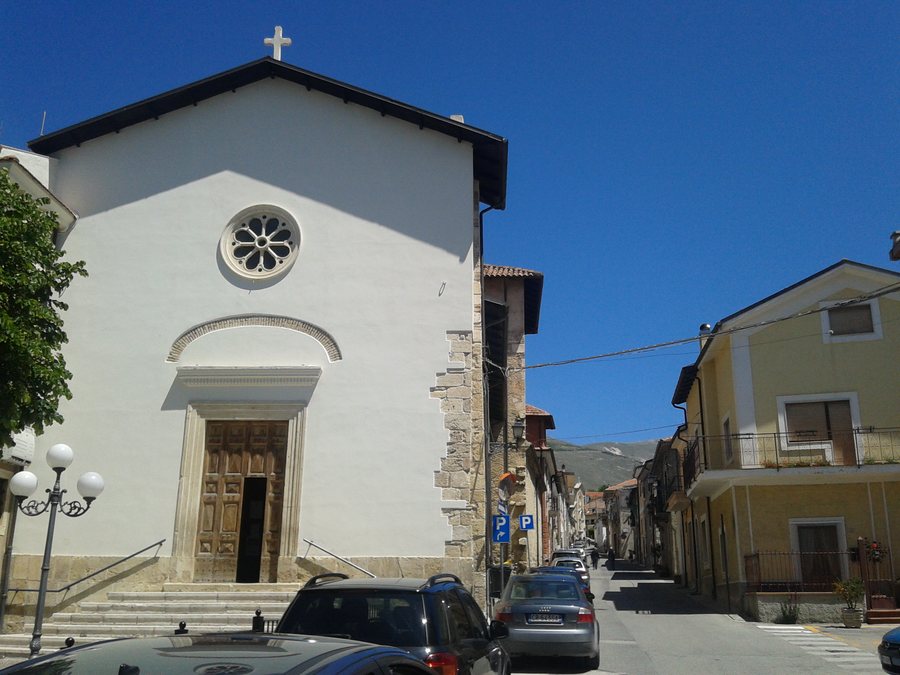 File:Chiesa Madonna delle Grazie a Cerchio.jpg
Photo: Marica Massaro via Wikimedia Commons, CC BY-SA 4.0
File:Chiesa Madonna delle Grazie a Cerchio.jpg
Photo: Marica Massaro via Wikimedia Commons, CC BY-SA 4.0
Cerchio lies at an elevation of 834 metres at the foot of Monte Corbarolo and on the northeastern side of the Fucino Basin. This means that this Italian town combines a clearly defined altitude with its proximity to the wide basin. For you, this setting provides a clear framework for understanding Cerchio as a destination between landscape and history.
Green landscape around Monte Corbarolo
Cerchio is located in the Sirente-Velino Regional Nature Park. The landscape around Cerchio stretches out in green all the way to the surrounding mountain ranges on the horizon. For travellers who do not wish to separate nature from cultural impressions, this landscape is an important part of the town. You therefore experience Cerchio not merely as a collection of individual buildings, but as a destination whose character is also shaped by the mountain ranges and the open Fucino Basin.
San Bartolomeo and religious history
The Chiesa di San Bartolomeo was probably built between the 12th and 13th centuries. It is the only religious monument in the Marsica mentioned in the document of the first Jubilee Year proclaimed by Pope Boniface VIII in 1300. This building therefore combines a medieval origin with a specifically documented connection to the religious history of the Marsica.
A Way of the Cross at the Chiesa di San Bartolomeo was inaugurated in 1987 and created by painters from the Abruzzese and Latin schools. This later artistic element complements the church’s older history with a work from the 20th century. Those interested in sacred architecture, religious imagery and regional artistic traditions will therefore find several historical periods centred around the same cultural focal point in Cerchio.
Museum in the former monastery
The Museo civico di Cerchio is located in the immediate vicinity of Cerchio. The museum’s first section opened in 1986 in the rooms of the former monastery of the Agostiniani Scalzi. The former monastery building is therefore part of the museum’s origins, while the Chiesa di San Bartolomeo represents an independent religious and architectural point of reference. For your travel planning, Cerchio can thus be explored through various forms of local history.
Bulla Indulgentiarum in the old village
The historic Bulla Indulgentiarum procession passes through the old village of Cerchio and includes participants in contemporary historical costumes as well as flag throwers. During the Bulla Indulgentiarum, the Bishop of the Marsi hands the Bulla to the mayor every year in order to open the procession and religious celebrations. Here, history becomes tangible for you not only through the church and museum, but also through a recurring procession with visible historical and religious elements.
An edition of the Bulla Indulgentiarum was announced for 24 August 2024. The event attracts numerous visitors every year. This date is explicitly part of the documented history of the event and should not be confused with a general statement about current dates. Regardless, the Bulla Indulgentiarum remains a distinctive subject for anyone wishing to get to know Cerchio through its religious customs, old village and regional history.
If you choose accommodation for a trip to Italy focused on culture and landscape, Cerchio can therefore be a clearly defined thematic option. The church, museum, historic celebration and green surroundings offer different points of connection for your travel planning. This allows you to tailor a hotel stay in Cerchio to your interests without reducing the town to just one experience.
Check prices, availability and amenities for your travel dates directly on Booking.com.
View accommodation and offersAdvertisement · Affiliate link to Booking.comDiscover more destinations
For your further travel planning in Italy: Civitella Alfedena, Campotosto, Castel Di Sangro, Cocullo, Villetta Barrea, San Demetrio Ne' Vestini, Ateleta and Carapelle Calvisio.
For the overarching travel overview: L-Aquila.

