
Gioia Dei Marsi: Discover Mountain Nature and History
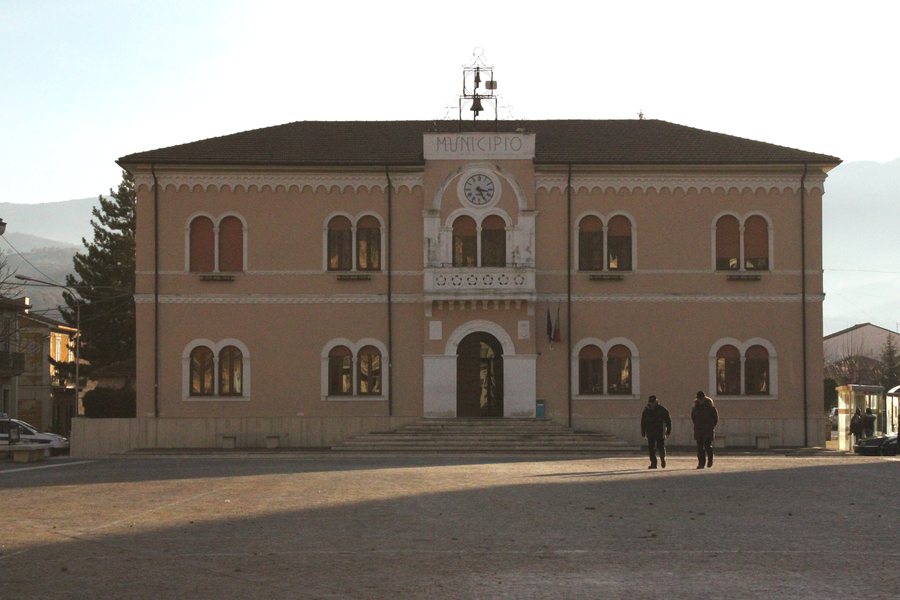 File:Municipio di Gioia dei Marsi Abruzzo.jpg
Photo: Marica Massaro via Wikimedia Commons, CC BY-SA 4.0
File:Municipio di Gioia dei Marsi Abruzzo.jpg
Photo: Marica Massaro via Wikimedia Commons, CC BY-SA 4.0
Mountain Landscapes, Wildlife and Historic Traces
Gioia Dei Marsi combines expansive mountain landscapes with opportunities for observing nature and a history visible in its towers, churches and archaeological sites. In the mountain area, hiking trails lead to the sources of the Sangro, the second-longest river in Abruzzo. This gives the area several thematic focuses: visitors can center their trip on movement through the landscape, wildlife observation or exploring the traces of earlier settlements.
Nature Among Forests, River Sources and Mountains
In the Colle Truscino area, a centuries-old holm oak forest extends across more than 80 hectares at an altitude of over 1,000 meters. Another special opportunity for observation is offered by the Terrazza panoramica di Gioia Vecchio, from which bears can be observed. Paragliding is also practiced in the mountains around Gioia Dei Marsi. This provides a new perspective on the towns, forests and plain. Appropriate preparation and respect for the mountains and protected nature are required for this activity.
Hikes with Clearly Defined Difficulty Levels
For a manageable hike, route U1 from Gioia Vecchio to La Sorgente is available. It takes 1.5 hours and is classified as moderately difficult. The U3 hike from Il Cilmo to Favone also takes 1.5 hours and is likewise considered moderately difficult. Both routes therefore offer clear guidance for travelers who want to plan their time in the mountains using consistent duration and difficulty information.
Castles and Archaeological Evidence
The historic traces are spread across several locations and elevations. The still-visible tower of the castle near Sperone dates from the second half of the 13th century. At an altitude of 922 meters are the remains of the medieval tower of Vico Castle. Near Gioia Dei Marsi, there is also an archaeologically significant area where four necropolises were discovered in the settlements of Quercia, Castelluccia, Alto le Tombe and Alto le Ripe. These places reveal different periods and forms of the past within the destination.
Churches, Festivals and Local Traditions
The churches also contribute to the cultural character of Gioia Dei Marsi. The Church of Santa Maria Nova has a stone façade. The Church of Santa Maria Assunta features stone altars and valuable paintings. In Gioia Vecchio, there is also a Sagra dedicated to “piliero,” an herb that grows in the mountains. The Festa di Sant'Antonio is associated with June 13, while the Festa gioiese is associated with the month of August. Churches, local festivals and the name of the herb thus provide access to the local culture that goes beyond the landscape.
Choose the Right Focus for Your Trip
When choosing a hotel, you can tailor the focus of your trip to these specific themes: hiking trails and mountain forests, wildlife observation, castle towers and necropolises, or the churches and festivals in Gioia Vecchio.
Check prices, availability and amenities for your travel dates directly on Booking.com.
View Accommodations and OffersAdvertisement · Partner link to Booking.comMore Destinations
Pescasseroli, Ovindoli, Campo Di Giove, Villetta Barrea, Cocullo, Villalago, Poggio Picenze, Avezzano.
To the overarching travel overview: L-Aquila.

