
Poggio Picenze: Castle, Churches and Sculpture
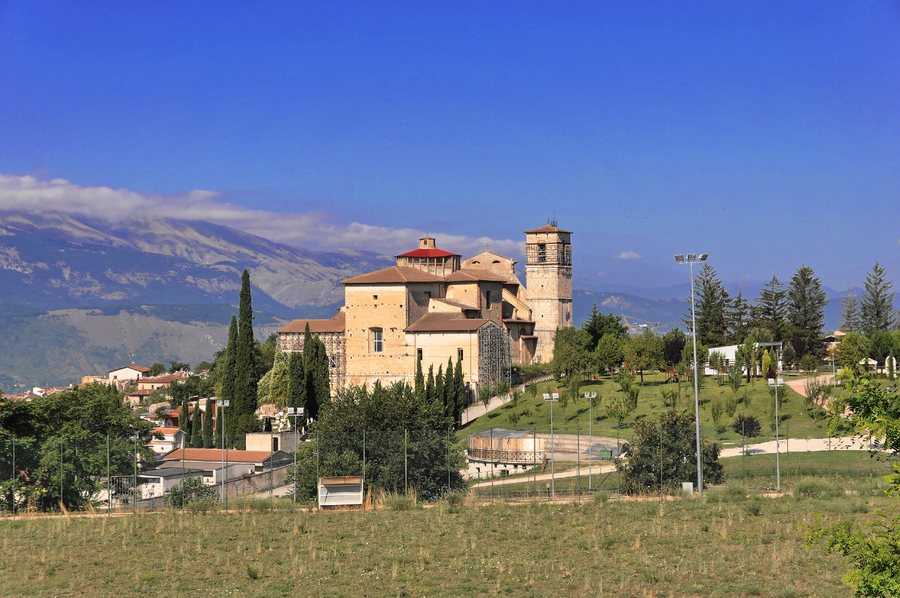 File:Poggio Picenze 2013 by-RaBoe 001.jpg
Photo: © Ra Boe / Wikipedia via Wikimedia Commons, CC BY-SA 3.0 de
File:Poggio Picenze 2013 by-RaBoe 001.jpg
Photo: © Ra Boe / Wikipedia via Wikimedia Commons, CC BY-SA 3.0 de
Poggio Picenze combines a castle complex, religious buildings, medieval architecture and a local tradition of sculpture. The Valle del Campanaro mountain trails are another attraction. If you are choosing a place with historical substance and opportunities for walks for your trip to Italy, you will find several different points of interest here.
From the Castle to Piazza Castello
The castle of Poggio Picenze is dated to around the year 1000. In 1173, it is described as a fortified castle with six towers, including a tall central tower. Today, its remains stand on Piazza Castello in the oldest part of the town and serve visitors as a viewpoint. The castle therefore leads directly to one of Poggio Picenze’s most distinctive squares.
Sculpture also shapes the townscape. Poggio Picenze has an artistic tradition of sculpture in white stone. Local sculptors have created fountains and monuments throughout the town. If you pay attention to shapes, materials and details while walking around, you will encounter this tradition not just at a single building, but in various places throughout the town.
Churches from Different Periods
The Chiesa della Visitazione was built between the 15th and 16th centuries. Its façade is designed in the Romanesque Aquilan style; the upper section features a high-relief Crucifixion. The construction period and façade design give this church a clearly recognisable historical character.
The Chiesa di San Giuliano was built at the beginning of the 15th century on the site of a small hospital. This hospital remained in operation until 1447. In the Chiesa di San Felice Martire, several periods likewise come together: the building was first erected in the 12th century and received a Renaissance façade in the 16th century.
Inside the Chiesa di San Felice Martire, the focus is on a three-aisled interior in the Baroque-Classical style. It also contains paintings of the Mysteries of the Rosary from the 16th century. For visitors interested in culture, this creates a tour in which medieval, Renaissance and later design elements can be distinguished.
Casa Medievale and Walking Trails
The Casa Medievale was built in the 13th century and is considered a rare Abruzzo example of a medieval merchant’s house. Its façade features a bricked-up so-called Porta del morto, as well as a monoforium and a biforium on the upper floor. The two terms refer to different historical window forms: a monoforium is a single-part window, while a biforium is divided into two parts.
For walks, the Valle del Campanaro offers more than 50 kilometres of mountain trails. They are known as the “Sentieri delle tre pietre”, were recently renewed and equipped with special signage. The different trail lengths help you adapt your plans to the desired duration of a walk without giving up the town’s cultural focus.
Further destinations: Cagnano Amiterno, Sulmona, Montereale, Pietransieri, Introdacqua, Pescocostanzo, Campo Di Giove and Collettara.
For the higher-level travel overview: L-Aquila.
Check prices, availability and amenities for your travel dates directly on Booking.com.
View accommodation and offersAdvertisement · Partner link to Booking.com
