
Raiano between Gorge, Hermitage and Ancient Paths
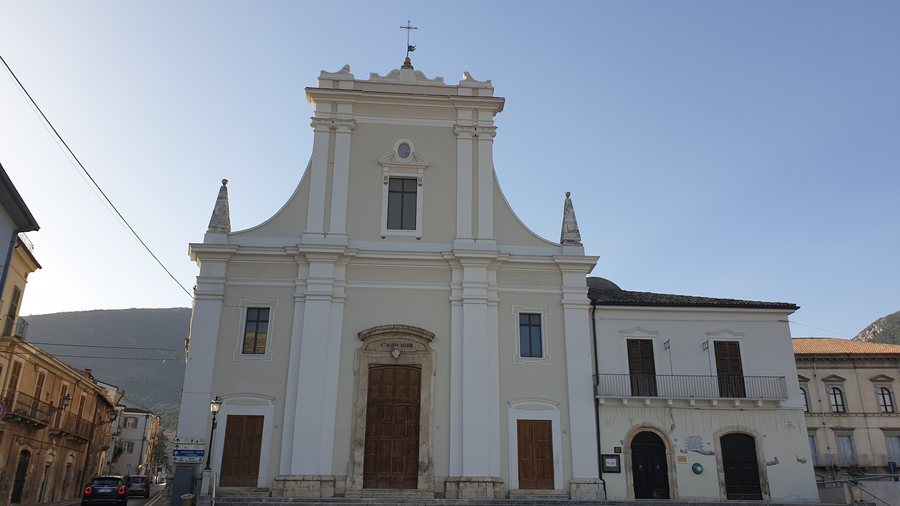 File:Raiano - Chiesa di Santa Maria Maggiore 02.jpg
Photo: Pietro via Wikimedia Commons, CC BY-SA 4.0
File:Raiano - Chiesa di Santa Maria Maggiore 02.jpg
Photo: Pietro via Wikimedia Commons, CC BY-SA 4.0
Raiano combines a distinctive natural environment with traces from many centuries. At its heart is the Riserva Naturale Regionale Gole di San Venanzio, which lies entirely within the municipality of Raiano. At the same time, paths lead to a hermitage built into the rock walls, Roman hydraulic engineering and Bronze Age rock paintings.
The Gole di San Venanzio as a Natural Environment
The Riserva Naturale Regionale Gole di San Venanzio forms an ecological corridor between the Parco Nazionale della Maiella and the Parco Regionale Sirente-Velino. This term refers to a natural area located between larger protected areas and describes their landscape connection. Hygrophilous forests grow along the banks of the Gole. These forests are adapted to permanently wet conditions and give the area a distinctly water-oriented character.
For your travel planning, this combination means that nature observation and physical activity can form a clear focus without losing sight of the town's cultural attractions. The gorge is therefore not merely a scenic backdrop, but the specific setting for several different paths and themes.
Four Paths with Their Own History
The network of paths in the Gole di San Venanzio comprises four routes. This makes it possible to choose according to your personal interest in the landscape, sacred history, ancient infrastructure or prehistoric art. Each name refers to a distinct subject and helps you classify the planned activity in terms of its content.
The Sentiero dell'Eremo di San Venanzio leads to the hermitage built into the rock walls above the waters of the Aterno. The destination combines a striking location with a religious building whose history reaches far back. The Eremo di San Venanzio can be dated to the end of the 15th century. Inside, it also preserves a valuable polychrome terracotta Compianto from the 16th century.
The Sentiero dell'Acquedotto delle Uccole follows a Roman hydraulic structure. It carried spring water to the ancient city of Corfinium, making the route a link between the landscape and ancient technology. The Sentiero di Rava Tagliata e Pitture Rupestri, by contrast, leads to ochre-red Bronze Age rock paintings protected by rock overhangs. The Sentiero Solfa e Madonna de Contra is another route, with springs containing sulphur-rich water.
Raiano between the Hermitage and Local Culture
Raiano's cultural side is also evident outside the nature trails in specific buildings and festival traditions. The Chiesa Santa Maria Maggiore houses a statue of San Venanzio from the 17th century. The church is designed without architectural barriers and thus provides important guidance for visitors who consider structural accessibility when choosing cultural destinations.
The Sagra delle ciliegie in Raiano has been documented since 1946. The festival is therefore one of the town's longer-standing cultural reference points. Together with the hermitage, the church and the paths, it creates a picture in which religious art, local tradition and older traces in the landscape stand side by side.
Important Information for Your Visit
Under the 2026 access rules, the Eremo di San Venanzio can only be visited with a guide. If you include this place in your plans, you should consider the guided tour an integral part of your visit.
Check prices, availability and amenities for your travel dates directly on Booking.com.
View Accommodation and OffersAdvertisement · Affiliate link to Booking.comMore Destinations
Introdacqua, Sulmona, Morino, Rocca Pia, Sassa, Villalago, Magliano De' Marsi, Bagno
To the overarching travel overview: L-Aquila.

