
Asola between Sant’Andrea, Museums and River Landscapes
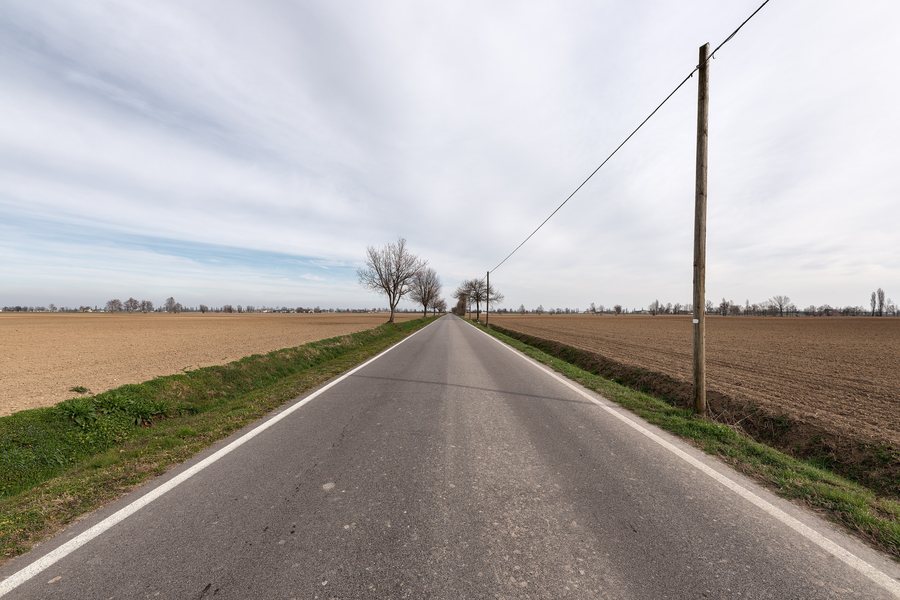 File:Via Compartitori - Asola, Mantova, Italy - March 2, 2019.jpg
Photo: Giorgio Galeotti via Wikimedia Commons, CC BY 4.0
File:Via Compartitori - Asola, Mantova, Italy - March 2, 2019.jpg
Photo: Giorgio Galeotti via Wikimedia Commons, CC BY 4.0
Asola between Sacred Art and River Landscapes
Asola reveals its history in specific places. Construction of the present-day Sant’Andrea church began in 1472 on the site of an older church, and it was consecrated on 27 January 1501. This sequence is particularly illustrative: an older sacred site and a building whose construction began at the end of the 15th century are clearly connected here in time. You therefore see not just individual dates, but a specific development centred around Sant’Andrea.
Sant’Andrea also preserves frescoes from the final years of the 15th century. They are attributed to the Cremonese artist Antonio della Corna. The frescoes complement the dating of the church’s construction with an artistic dimension and provide a precise reference point if you wish to explore Asola through art and history.
From the Neolithic Age to Roman Times
A second perspective is provided by the Museo Civico “G.Bellini”. Its oldest holdings include Neolithic vases and greenstone axes, followed by finds from the Bronze Age and Roman times. This sequence leads from the earliest periods through the Bronze Age and into the Roman era. The Museo Civico “G.Bellini” also offers educational activities.
The cultural perspective also extends into the wider regional surroundings of Asola. The Museo Internazionale della Croce Rossa is a museum there. The Fondazione Palazzo Bondoni Pastorio is likewise a museum in this wider regional area. The Associazione Teatro Sociale Montichiari and the Museum of Resurgence are also museums in this regional area. In this way, alongside Sant’Andrea and the Museo Civico “G.Bellini”, you can include further cultural themes in your travel considerations without losing sight of Asola’s own local connection.
Parks and Paths by the Water
The parks in the wider regional surroundings of Asola include Parco Desenzani, Parco Pastore, Parco dell’Ossario and Parco della City. Each of these names initially refers to an individual park; together, they expand the cultural focus with a landscape perspective. For planning your days, you can therefore choose between historical interiors, museum content and park landscapes, giving each a different emphasis.
The Chiese River reaches Asola and, a few kilometres later, flows into the Oglio near Bizzolano, below the municipality of Canneto. A walking path leads from the gardens near the bridge over the river in Asola to the Chiusa. These two facts give the waterscape a specific local connection: the river is part of the regional geography, while the walking path describes a particular link between the gardens, the bridge and the Chiusa.
When choosing a hotel in Asola, you can consciously weigh the priorities of your trip. Sant’Andrea and the Museo Civico “G.Bellini” are suited to days focused on art, architectural history and long historical periods. The Chiese, the walking path to the Chiusa and the parks, by contrast, open up a landscape-based reading of the town. Which connection you wish to pursue more strongly therefore depends on your own interests and your preferred travel rhythm.
Check prices, availability and amenities for your travel dates directly on Booking.com.
View Accommodation and OffersAdvertisement · Affiliate link to Booking.comOther Destinations
Roncoferraro, Marmirolo, Canneto Sull'oglio, Governolo, Buscoldo, Gazzuolo, Sermide and Casaloldo
To the higher-level travel overview: Mantua.

