
Mantova: Renaissance, Water and Mantuan Culture
Accommodation in Mantova
Mantova Between Renaissance and Water
Mantova combines a layered history with an unusual location surrounded by water. Mantua and Sabbioneta are exceptional examples of Renaissance urban planning, architecture and artistic achievement, linked to the ideas and work of the ruling Gonzaga family. This creates a destination where political history, architecture and artistic design can be explored in close connection with one another.
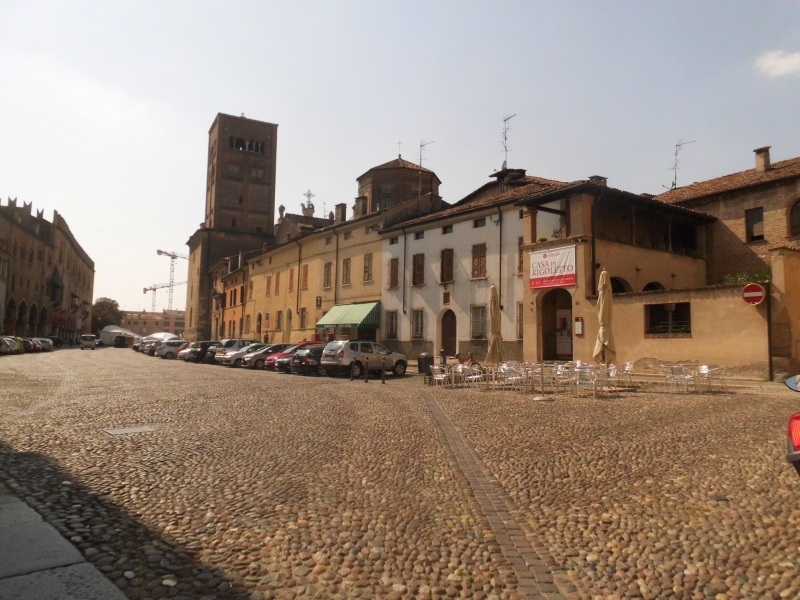
Mantua also preserves traces of Roman times. During the 15th and 16th centuries, the city was renewed through hydraulic engineering, urban-planning and architectural measures. This layering of periods makes Mantova particularly interesting for visitors who want to see not only individual buildings but also trace the development of a city through its different historical eras.
Palazzo Ducale, Theatre and Sacred Architecture
The Palazzo Ducale is one of Italy's most extensive and architecturally complex ensembles. It includes the Camera degli Sposi in the Castello di San Giorgio, a masterpiece decorated with frescoes by Andrea Mantegna. Since the beginning of the 20th century, the Palazzo Ducale has also housed a state museum.
The Basilica di Sant'Andrea also takes you back to the Renaissance. It was built by Luca Fancelli based on a design by Leon Battista Alberti and completed in 1494. Its crypt contains a chest with the Sacri Vasi, precious ampoules said to contain the blood of Christ, which the legionary Longinus is said to have collected together with soil from Golgotha. The religious tradition associated with them is itself an important part of this site's significance.
The Teatro Scientifico Bibiena provides a different historical emphasis: it was built between 1767 and 1769 primarily for scientific gatherings and was also open to theatre performances and concerts. Today, it continues to be used for music series, concerts and high-level conferences.
The Mincio Lakes and a Dedicated Cycling Route
Mantova is surrounded on three sides by artificial lakes formed by the Mincio River. When planning your day, you can therefore treat cultural destinations and experiences by the water as separate focuses, without reducing the city to its Renaissance architecture.
Mantua railway station is located in Piazza Don Leoni, just a few minutes' walk from the historic centre. This specific point of reference provides clear guidance when planning your journey. Anyone wishing to explore Mantova by bicycle can take the Ciclovia 1 - Mantova - Peschiera, a 43.5 km connection to Peschiera. It runs along the embankments of the Mincio and artificial canals entirely on a dedicated cycle and pedestrian path within the Parco Regionale del Mincio.
A Culinary Connection to the City
Torta Sbrisolona is also part of Mantuan identity. It is regarded as a symbol of the city's pastry-making tradition and adds a culinary dimension alongside Mantova's historical, artistic and natural themes. When choosing your hotel in Mantova, it may be helpful to define the focus of your trip in advance: architecture, museums, theatre, sacred art, the waterscape, cycling routes or the local pastry-making tradition lead to different daily rhythms. This allows you to assess the location of your accommodation according to your own priorities, without limiting Mantova to just one experience.
More destinations for planning your trip to Italy: Pietole, Bagnolo San Vito, Cavriana, Campitello, Virgilio, Sermide, Gabbiana, Palidano.
For the higher-level travel overview: Mantua.
