
Discover Medole: Art, History and Culture
Medole combines art, architectural history and local history. The town is home to the Civica Raccolta d’Arte, churches from different periods and Baroque palaces, as well as a cultural program.
Art and Religious Buildings
The Civica Raccolta d’Arte is located in the historic town center, within the Torre gonzaghesca complex, the last surviving evidence of the ancient Castrum Medulae. Its collections include paintings, graphic works, prints and sculptures, predominantly by artists from Mantua, spanning the early years of the 20th century to the present day. The Civica Raccolta d’Arte is listed as open on Sundays from 09:00–12:30 and 15:00–19:00; the published schedule has been in effect since January 1, 2025.
The parish church of Santa Maria Assunta was built in the second half of the 16th century and remodeled in 1750 based on a design by Paolo Soratini. It houses a 15th-century terracotta depiction of the Compianto by Guido Mazzoni (Modanino or Paganino), as well as Titian’s altarpiece “Cristo Risorto che appare alla Madre.” The painting depicts the risen Christ appearing to his mother.
The Pieve di Santa Maria dates from the 11th century and displays Romanesque features. The surviving frescoes are dated to the beginning of the 15th century. The Convento dell’Annunciata was established in 1455 through the donation of a private chapel with a house and garden to the Augustinian Hermits. Features of the late Gothic Po Valley include parts of the cloister with frescoes, which were restored by the owners.
Castle, Noble Residence and Townscape
The medieval past is particularly clear at the Torrione Gonzaghesco. It is the surviving remains of the ancient Castello Castrum Medulae, built between 1010 and 1020 and expanded in the 15th, 16th and 17th centuries under Gonzaga rule, which lasted from 1404 to 1691. The Torrione is 26 meters high and enclosed on three sides from a height of 8 meters above the ground. It is the only surviving element of the original medieval castle; its characteristic square layout is reflected in the center of Medole.
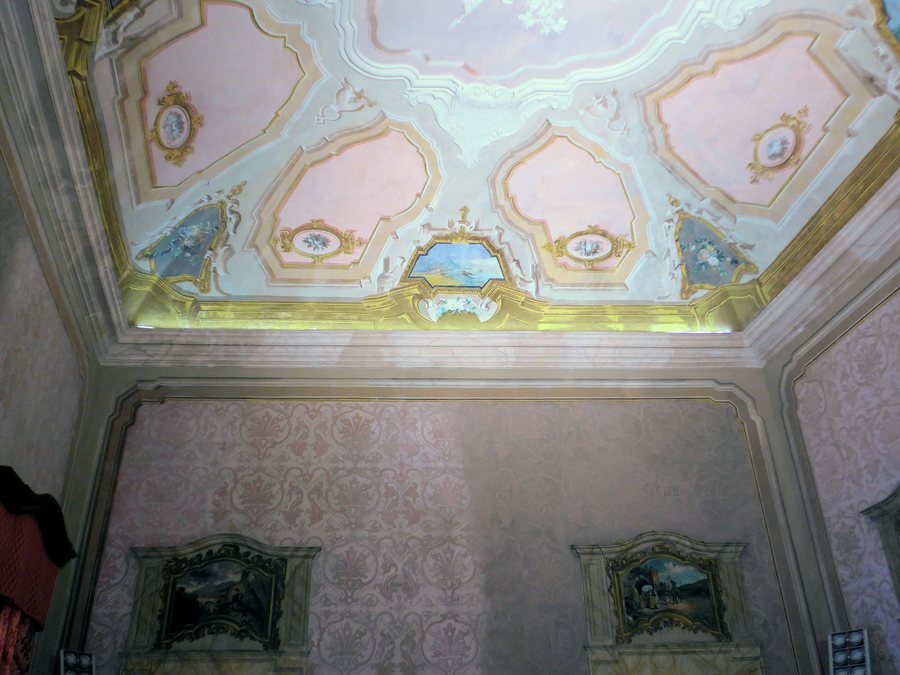
The historic center is characterized by austere Baroque palaces from the 17th and 18th centuries. Their elegant marble portals from this period are considered an architectural highlight. Palazzo Scaratti–Minelli is a historic noble residence from the 18th century and is associated with the history of the Risorgimento in Medole.
Historic Routes and Events
If you would like to combine visits to historic sites with physical activity, the “24 GIUGNO 1859. LA BATTAGLIA NELLA PIANA” loop trail runs through the central section of the former battlefield of Medole. Monte Medolano reaches 92 meters above sea level and served as an observation point for Marshal Patrice de MacMahon during the battle.
Medole also offers an extensive calendar of events, with a focus on music and entertainment. This also includes traditional food and wine events. In addition, the Teatro Comunale organizes an extensive annual program of events.
Discover More Places
For further travel planning, you can also visit Palidano, Redondesco, Goito, Curtatone, Piubega, Sermide, Pietole and San Giorgio Di Mantova.
For the overarching travel overview: Mantua.
Check prices, availability and amenities for your travel dates directly on Booking.com.
View Accommodations and OffersAdvertisement · Affiliate link to Booking.com
