
Triei: Nuraghi, Landscape and Sardinian Festivals
Accommodation in Triei
Triei combines a varied landscape with prehistoric sites, religious festivals and cultural events. This gives you a destination whose character can be experienced both in nature and through its traditions and historic buildings.
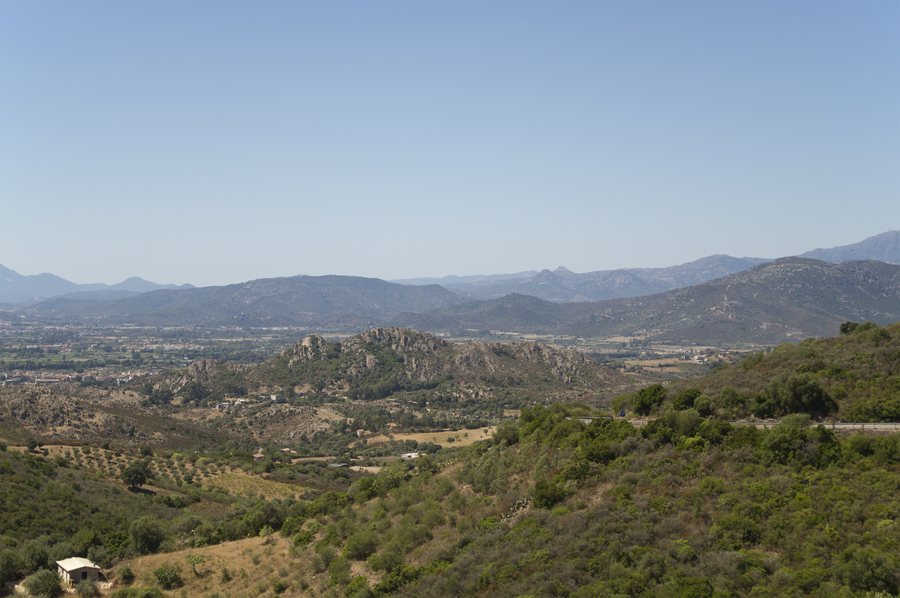 File:08040 Triei, Province of Ogliastra, Italy - panoramio.jpg
Photo: trolvag via Wikimedia Commons, CC BY-SA 3.0
Landscape between plains, hills and maquis
The landscape around Triei alternates between plains and hills covered with forests of holm oaks, cork oaks and carob trees, as well as dense Mediterranean maquis. As a result, different landscape types shape the area around Triei.
The forests and Mediterranean maquis of Triei provide a habitat for martens, mouflons, golden eagles and falcons. Those interested in nature and wildlife will therefore find this just as important a theme here as the exploration of the historic sites.
Nuraghi and historic landmarks
The Tomba dei Giganti di Osono is a burial structure more than twenty metres long that was unearthed intact in 1989.
The five-lobed Nuraghe Bau Nuraxi lies about two kilometres from Triei and was built from large granite blocks. The parish church of Santi Cosma e Damiano dates from the 16th and 17th centuries.
Castello di Medusa, a castle, is located in the area around Triei. Nuraghe Lorio, Nuraghe Ruyu and Nuraghe Corongiu are also in the surrounding area; each of these three sites is a historic landmark.
Murals and festivals throughout the year
Arte a Triei takes place in May. As part of the event, the façades, streets and squares of the oldest neighbourhoods were enriched with murals and works by Sardinian, Italian and international artists. Here, art is therefore part of the townscape itself.
The procession for San Sebastiano, held in May, is characterised by decorated ox carts. During the May festival s’Orroseri of Madonna del Rosario, the local bread sa simbula is blessed and distributed. Both occasions combine religious traditions with visible and culinary elements of local customs.
The fires of Sant'Antonio abate are lit in mid-January, and traditional sweets such as sa paniscedda are tasted. The festival of Sant'Antonio da Padova takes place on 10 August at the country church of Mullò, four kilometres from Triei. The different dates and venues provide several cultural points of connection for planning your trip.
Beaches in the surrounding area
The area around Triei is home to Spiaggia di Santa Maria Navarrese, Cala Goloritzè, Spiaggia di Isula Manna and Spiaggia di Cala dei Gabbiani; all four are beaches. Coastal destinations thus complement the landscapes, wildlife, nuraghi and festivals that define Triei as a destination.
When planning your trip, you can therefore clearly set your focus: interests in nature lead to forests, maquis and wildlife, while cultural interests begin with the nuraghi, Osono’s burial structure, the parish church, murals and festivals. The beaches in the surrounding area broaden this range with another type of landscape.
More places to include in your travel plans
Other places that you can include in your trip to Italy: Perdasdefogu, Gairo Sant'Elena, Girasole, Osini, Jerzu, Arbatax, Arzana and Baunei.
For the main travel overview: Ogliastra.

