
Limpiddu: Nuraghe, Lagoons and Rural Culture
Accommodation in Limpiddu
Limpiddu preserves agropastoral traditions and is surrounded by Mediterranean maquis, cultivated fields and areas used for livestock farming. The village can therefore be explored through its landscape and rural culture, but also through prehistoric and religious heritage. For visitors who want to understand not only their accommodation but also the character of the surrounding area when choosing where to stay, several clearly distinct focal points can be found here.
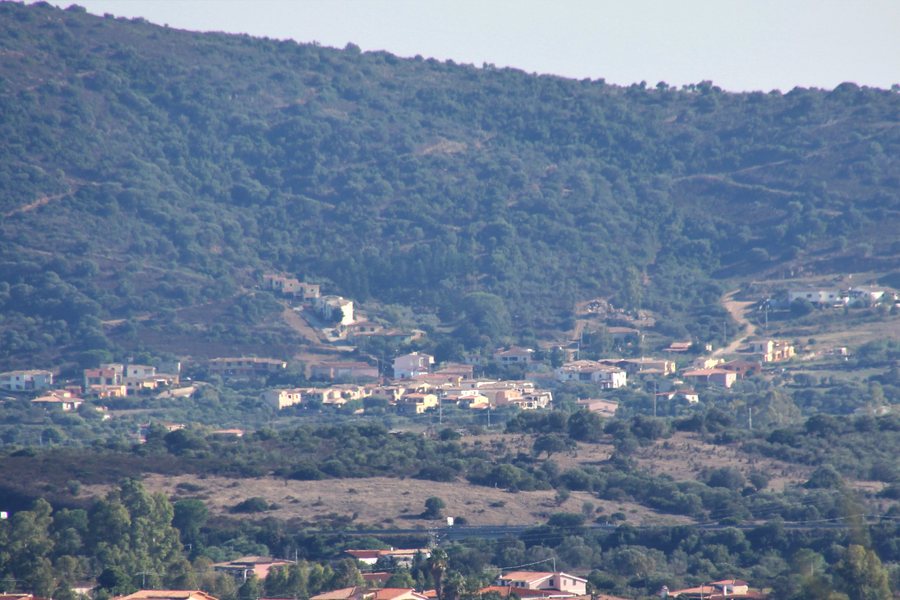
Rural Character and Coastal Lagoons
There are five coastal lagoons in the Budoni area: Li Cucutti, Li Salineddi, Stagno Morto, Sant’Anna and Stagno di Porto Ainu. The coastal lagoons are home to wintering greater flamingos, great egrets and ospreys, as well as breeding purple gallinules. This gives the landscape a distinct natural dimension that stands independently alongside its cultural heritage. For visitors who want to observe coastal areas attentively, this topic offers a separate perspective on the Budoni area. If you do not plan your days exclusively around cultural history, you can consider the lagoons and birdlife as an independent focus.
Nuraghe Conca 'e Bentu
Nuraghe Conca 'e Bentu stands on a rocky promontory in the Budoni area. It is a single-tower nuraghe with a central main circular chamber. Originally, a staircase provided access to the terrace, from which the Budoni plain and the coastline could be viewed. At this nuraghe, architectural form, elevated position and views across the landscape can thus be experienced together.
Orientation at the Cultural Site
Nuraghe Conca 'e Bentu can be reached by following the signposts to the village of Solità and then taking an unpaved road within the village. The Pro Loco in Limpiddu provides tourist assistance and information.
Prehistoric and Religious Traces
The Domus de Janas L'Agliola is a prehistoric tomb structure carved into the rock. The Chiesa del Sacro Cuore is dedicated to the Sacred Hearts of Jesus and Mary. Thus, two different cultural forms stand side by side: prehistoric funerary architecture and a church with a clear religious dedication. When choosing a hotel or other accommodation for your stay in Limpiddu, you can therefore decide whether to focus on archaeology, religious culture, lagoons or the rural character.
Festa di Limpiddu
A clearly defined event in time is the Festa di Limpiddu. It was scheduled for 17 and 18 July 2026 and was to take place in the village in honor of the church’s patron saint. The announced date therefore belongs in a specific travel plan and should not be understood as a year-round experience.
Getting to Limpiddu
When traveling from Olbia, the official route follows the SS131dcn toward Nuoro; after approximately 30 kilometers, take the Budoni/Limpiddu exit.
More Destinations
More destinations: Porto Rotondo, Golfo Aranci, Tanca Manna, Agrustos, Matta E Peru, Barrabisa, Cugnana, Luddui
To the overarching travel overview: Olbia-Tempio.

.jpg)